C_THR86_2605 Scenario Questions: Flashcard-Based Revision for SAP Compensation
Quick Summary
Flashcards help candidates recall SAP SuccessFactors Compensation terms, configuration purposes, and process links. Pairing them with scenario practice turns recalled facts into applied decisions. This guide covers topic coverage, sample cards, and a 20-minute daily routine.
Introduction
SAP SuccessFactors Compensation brings many connected ideas together: plans, worksheets, budgets, eligibility rules, guidelines, and employee data. Rereading notes often feels productive while recall stays shaky. A flashcard asks the question first, so memory does the work before the answer appears.
C_THR86_2605 Scenario Questions pair well with that habit. The Exam Questions course page lists a C_THR86 Flashcards add-on with more than 468 cards across the syllabus, built for spaced-repetition-style revision on mobile and desktop. Recall is the starting point, and the real goal is using each concept when a business situation calls for it.
How flashcards support scenario questions
A flashcard tests recall of one concept. A scenario question tests whether you can apply that concept to a new situation.
Take eligibility. A card asks what eligibility rules control, and the answer says they decide which employees can participate in a plan or component. A scenario then describes employees missing from manager worksheets, and you weigh employee information, eligibility conditions, and worksheet populations before proposing a fix.
Four stages connect the two formats:
Remember the purpose of a feature.
Understand how it works and where it is configured.
Apply it to a business situation.
Explain why your solution fits.
Using cards and scenarios together keeps these stages linked.
Topics your flashcards should cover
Terminology and core concepts
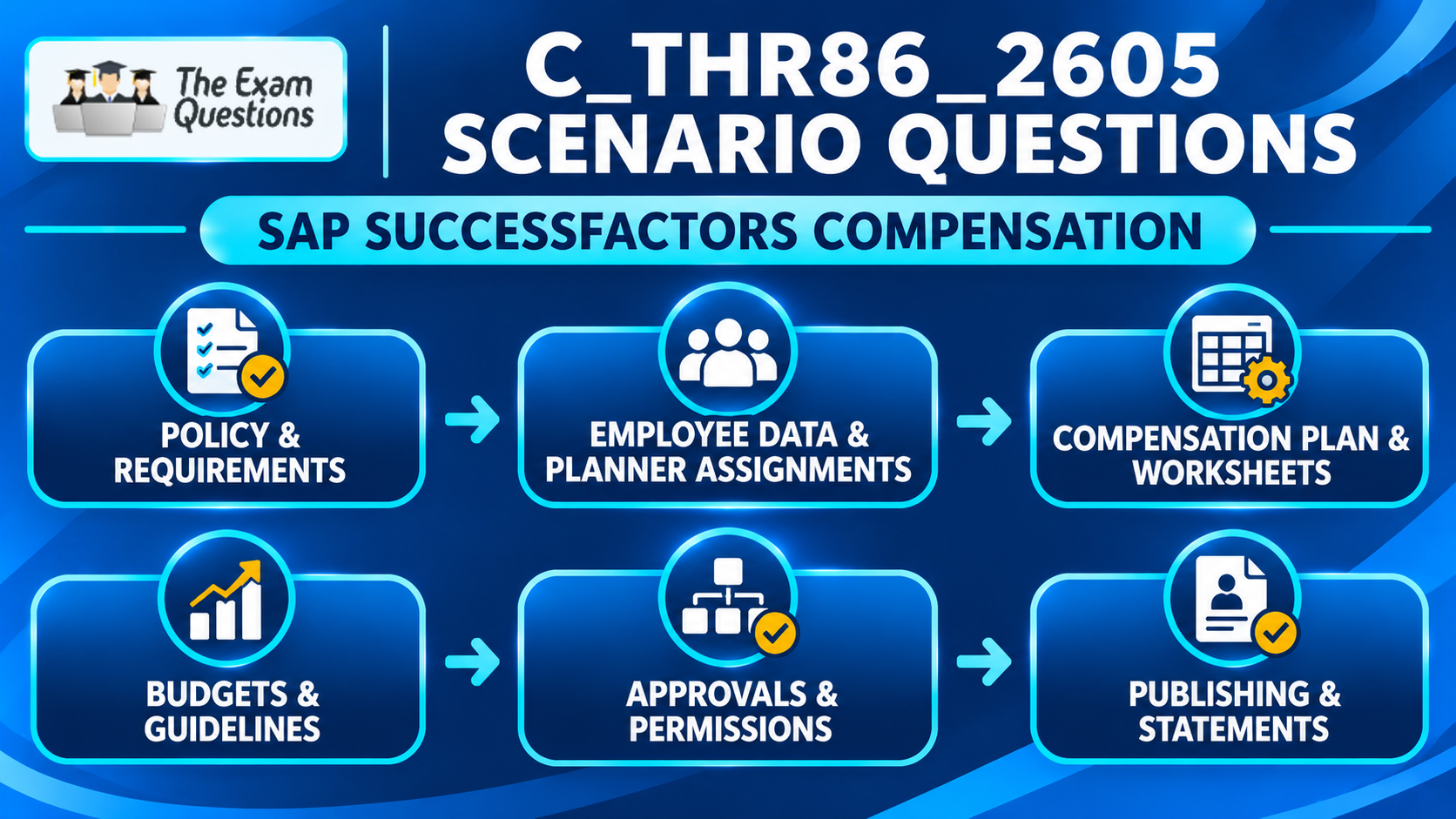
Start with compensation plans, templates, worksheets, planners, budgets, guidelines, eligibility, and compensation components. Make sure you can separate a plan template from the worksheet managers use to review employees and enter recommendations.
Plan configuration and worksheets
Cover plan settings, XML configuration, worksheet components, route maps, and template validation. One useful card asks why a template should be validated before worksheets launch.
Budgets, guidelines, and eligibility
These three shape recommendations and participation. Cards should explain budget calculation methods, allocation responsibilities, guideline conditions, and the levels at which eligibility applies. A budget controls available amounts, and guidelines set parameters for recommendations.
Permissions, planner hierarchies, and route maps
Use cards to separate planner assignments, employee participation, user access, and approval routing. A route map controls the workflow worksheets follow, and the planner hierarchy identifies who plans.
Employee data and integration
Cover employee information requirements, import validation, field mapping, effective dates, and Employee Central integration. These matter most when you investigate missing data or unexpected publishing results.
Reporting, statements, and spot awards
Add compensation reports, statements, total compensation templates, and spot-award configuration, which show how results are reviewed and communicated.
Sample flashcards with answers
These original cards are revision aids, separate from SAP's assessment content.
Card question Answer What is a compensation worksheet? The planning sheet where managers or planners review compensation and enter recommendations. What do eligibility rules determine? Which employees qualify for a plan, component, or specific field. What are compensation guidelines for? Setting parameters for recommendations. What does a compensation budget control? The financial allocation available for planning. What does a route map do? Defines the workflow and approval steps for worksheets. What is employee field mapping used for? Connecting source information to the right destination fields. Why validate compensation XML? To find structural issues before continuing plan configuration. What are compensation statements for? Communicating compensation information to employees.
For each card, answer before flipping it, restate the answer in your own words, and picture one situation where the concept applies.
Turning flashcard knowledge into scenario answers
Short answers grow into full explanations through application. Here is one example.
Card: What do compensation eligibility rules determine?
Recall: They determine which employees qualify for planning or for particular components.
Scenario: An HR manager reports that some employees appear in worksheets yet cannot receive merit recommendations.
Application: Investigate component-level or field-level eligibility conditions alongside the relevant employee information.
Explanation: Eligibility can apply at template, component, and field levels. Depending on where a condition sits, an employee may stay visible on the worksheet while one compensation field remains unavailable.
A recalled definition gains value once it guides an actual investigation, so keep scenario practice in every session.
A daily flashcard routine
A short, steady routine works well:
Spend five minutes on recall: read the question, answer aloud, then check.
Sort cards into three piles: confident, needs review, and cannot explain.
Pick one card from the second or third pile and turn it into a small business scenario for ten minutes. Say where the configuration matters and what you would investigate.
Use the last five minutes to log concepts that need more attention.
The SAP official certification page lists the current assessment format, which SAP describes as scenario-based, with a two-hour duration and a 60% pass score. SAP's Compensation course structure offers a reliable outline for topic-by-topic revision.
Common mistakes when using flashcards
Memorizing an answer without grasping it leaves gaps: knowing that a route map controls approval progression helps little if you cannot contrast it with the planner hierarchy. Overloaded cards slow review, so give each card one concept or one relationship. Time spent only on definitions leaves scenario skills underdeveloped. A flashcard set also covers a fixed scope, so combine it with current SAP documentation and scenario practice.
Frequently asked questions
What are revision flashcards for this certification?
They are short question-and-answer cards on SAP SuccessFactors Compensation topics. They help candidates recall terminology, configuration purposes, and relationships between features.
How many flashcards does The Exam Questions offer?
The course page describes its C_THR86 Flashcards add-on as containing more than 468 cards across the syllabus sections.
Can flashcards replace scenario practice?
Flashcards build recall, and scenario practice builds application and explanation. Candidates benefit from both.
Which subjects should the cards cover?
Cover compensation plans, worksheets, budgets, eligibility rules, guidelines, data integration, route maps, permissions, Employee Central publishing, reporting, and statements.
How often should candidates review cards?
Review regularly and give extra time to hard concepts. A spaced-repetition-style routine organizes repeated revision so each card gets attention in proportion to how hard it is.
Are flashcard answers official SAP exam content?
Independently created flashcards are educational revision material, and SAP's assessment content stays separate.
Conclusion
Preparation becomes more organized when flashcard recall joins practical application. Short cards strengthen terminology and configuration knowledge, and scenarios show how to use that knowledge in realistic implementation situations.
Remember a concept, understand its purpose, spot when it applies, and explain how it solves the problem. For more SAP SuccessFactors Compensation practice, visit The Exam Questions and explore the scenario questions and flashcard revision material.